
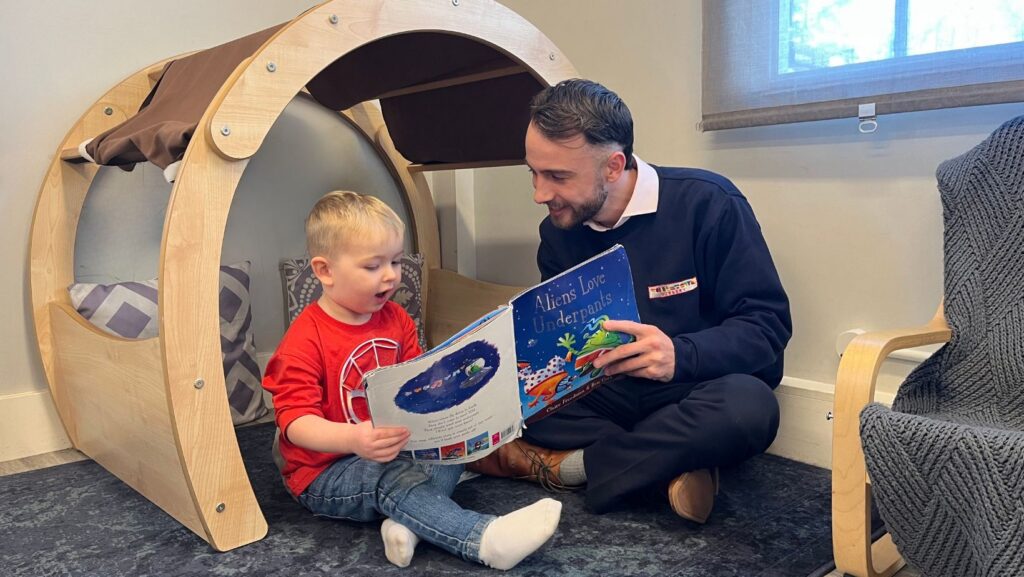

There’s something special about story time. A familiar book, a comfortable space and a moment of calm connection can become one of the most powerful parts of a child’s day. While reading may feel simple, the impact it has on early development is anything but. The benefits of reading to children reach across communication, emotional wellbeing, imagination and confidence, helping children thrive both in nursery and at home.
At Toddletown, storytelling plays an important role in everyday life. From shared group stories and cosy book corners to songs, rhymes and interactive storytelling, children are surrounded by language in ways that feel joyful and meaningful. These experiences help children build the foundations they need for learning, while also fostering a genuine love of stories.
Why reading matters so much in early childhood
In the early years, children’s brains are developing at an incredible pace. Reading aloud introduces children to new words, sounds and sentence structures, supporting language development long before children begin to read independently. It also strengthens listening and concentration skills, helping children learn how to focus, follow a sequence and make sense of what they hear.
One of the most important benefits of reading to children is the opportunity it gives them to explore emotions and relationships. Stories help children recognise feelings, understand different perspectives and develop empathy, whether it’s learning how characters solve problems, navigate friendships or manage big emotions.
What makes a perfect story for children?
Not all stories are created equal when it comes to engaging young minds. The stories children connect with most tend to have:
- Simple, rhythmic language that’s enjoyable to listen to
- Repetition that builds confidence and familiarity
- Characters children can relate to
- Opportunities for interaction, such as predicting what might happen next
Stories that invite children to join in, through actions, sounds or repeated phrases, encourage active participation rather than passive listening. This makes story time more engaging and supports confidence in communication.
Music and rhythm also play an important role. Songs, rhymes and stories with strong patterns help children tune into sounds, supporting early phonological awareness in a way that feels natural and fun.
The School Reading List has put together recommended book lists for children and teens, from early years right through to Year 11. Each age group has its own downloadable, bookshelf-style poster, making it easy to find stories that might spark interest or become a new favourite at home. Whether you’re enjoying picture books together or supporting older children to choose what to read next, it’s a gentle, practical way to encourage a love of reading for pleasure. Click here to discover your recommended books.
Creating meaningful story moments at nursery and at home
At Toddletown, stories are more than just books. They’re part of how children explore ideas, express themselves and make sense of the world. Storytelling might happen outdoors, through role play, during group time or woven into everyday activities. These shared moments help children feel secure, valued and confident to share their thoughts.
At home, reading together doesn’t need to be complicated. A short story, a favourite book read again, or even talking through pictures can all have a positive impact. The benefits of reading to children come from the shared experience, the conversation, the closeness and the enjoyment of spending time together.
Celebrating National Storytelling Week
National Storytelling Week is a wonderful reminder of the power stories hold in children’s lives. It celebrates reading, oral storytelling and creativity, encouraging children to explore language in ways that feel exciting and accessible. Whether through books, songs or imaginative play, storytelling helps children build skills they’ll use throughout their lives.
By making stories part of everyday routines, we’re helping children grow into confident communicators, curious thinkers and happy learners, one story at a time.